If you've been researching laser and light-based treatments, you've likely encountered all three names: Halo, MOXI, and BBL. They're frequently mentioned together, often recommended in combination, and each has earned a well-deserved reputation for improving skin health. But they work differently, address different concerns, and come with meaningfully different expectations around downtime and frequency.
Understanding the distinctions helps you walk into a consultation informed and confident. This guide explains how each treatment works, what it's best suited for, and how to think about which path makes sense for your skin.
What These Three Treatments Have in Common
All three are delivered on the Sciton platform, which is why you often see them discussed alongside one another. Sciton is widely regarded as the clinical standard in energy-based skin treatment, and Wise Aesthetics has built our laser program around it.
Despite sharing a platform, Halo, MOXI, and BBL operate on entirely different mechanisms. One uses fractionated laser energy. One uses non-ablative fractional wavelengths. One is not a laser at all. That distinction matters when you're evaluating which concern you're treating and how much recovery time you're willing to plan for.
BBL (Broadband Light)
What It Is
BBL is a light-based treatment, not a laser. It uses Broadband Light, a technology that selectively targets chromophores in the skin, specifically melanin and hemoglobin. This makes it exceptionally effective at addressing the two most common photodamage complaints: brown discoloration and redness.
When BBL energy is absorbed by pigmented cells or visible blood vessels, it converts to heat and disrupts the target without damaging the surrounding tissue. The body then clears that debris gradually, which is why results develop progressively over several weeks.
What It Addresses
BBL excels at correcting sun damage, age spots, freckles, uneven pigmentation, rosacea-associated redness, facial veins, and general sallowness. It also has a well-established role in maintenance, particularly through the BBL Forever Young protocol, which research suggests can influence how skin ages at the cellular level when used consistently over time.
What to Expect
A BBL treatment takes 30 to 45 minutes. Most clients experience mild warmth during the treatment and a sunburn-like sensation for a few hours afterward. For pigmentation correction, treated spots will darken and flake away over seven to ten days. There is no meaningful downtime, though you will look slightly sun-kissed for a day or two.
A series of three treatments spaced four to six weeks apart is the standard approach for meaningful correction. Quarterly maintenance is appropriate for most clients once the initial series is complete.
BBL Is a Strong Fit If You...
- Have visible sun damage, brown spots, or freckles as your primary concern
- Deal with persistent redness, flushing, or rosacea
- Want a corrective treatment with minimal social downtime
- Are building a skin maintenance program and want a reliable quarterly option
- Are comfortable committing to a series rather than a single treatment
Important Note on Skin Type
BBL relies on the selective absorption of light by pigment. For this reason, it is most appropriate for Fitzpatrick skin types I through III. Darker skin tones carry a higher risk of post-inflammatory hyperpigmentation, and your provider will assess this carefully during your consultation.
MOXI
What It Is
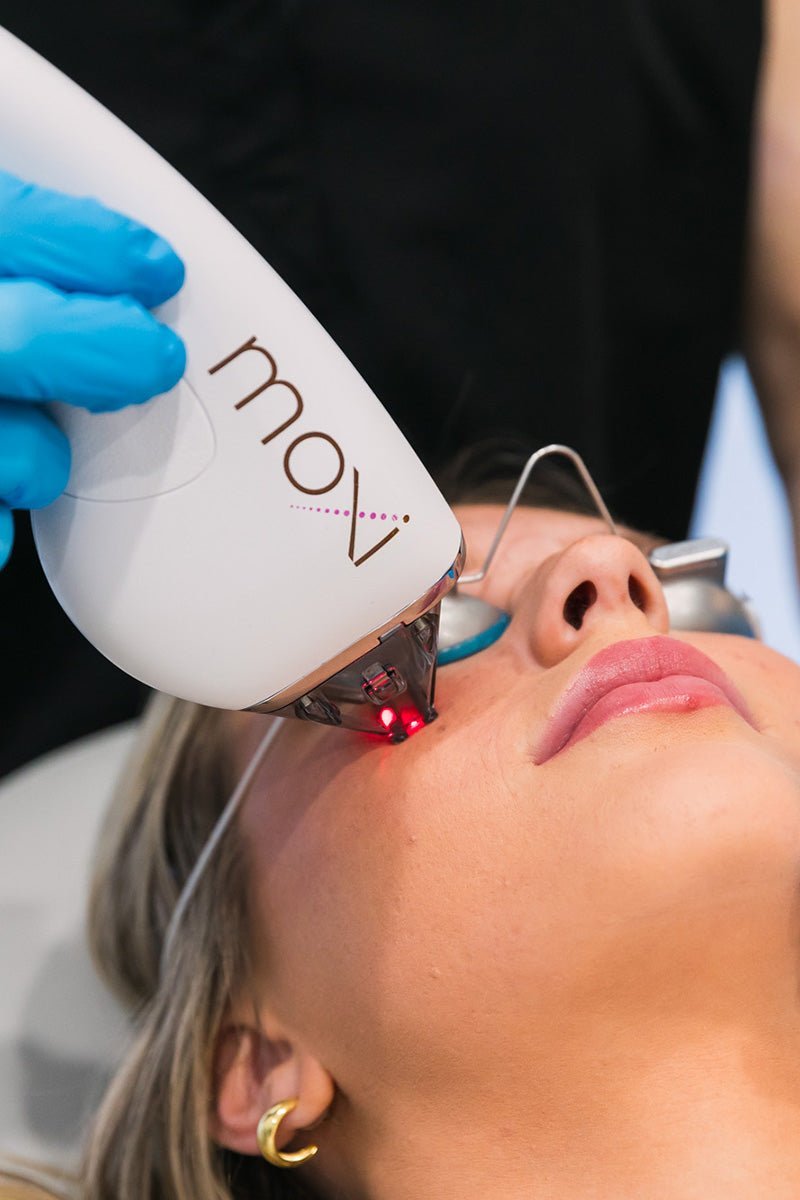
MOXI is a non-ablative fractional laser. It delivers fractionated 1927nm wavelength energy to create thousands of microscopic treatment zones in the skin, stimulating the body's natural renewal process without removing the surface layer. Because the outer skin remains largely intact, recovery is significantly gentler than with ablative approaches.
MOXI was designed with a specific patient in mind: someone in the earlier stages of skin aging who wants to get ahead of sun damage, dyschromia, and textural changes before they become more entrenched.
What It Addresses
MOXI is particularly effective at correcting mild to moderate dyschromia and photodamage, refining skin texture and tone, and addressing fine surface irregularities. It is also commonly used as a "prejuvenation" treatment for clients in their late twenties and thirties who want to invest in their skin health before more significant changes develop.
MOXI is frequently paired with BBL in a combination known as MOXI + BBL, where the BBL addresses pigment and redness while MOXI works on texture and cellular renewal simultaneously.
What to Expect
Treatment takes 20 to 30 minutes. In the days following, clients typically experience what is called MENDS (microscopic epidermal necrotic debris), which looks like a light, sandpaper-like texture on the skin before it exfoliates. This process usually takes three to five days. Redness is common for 24 to 48 hours. Most clients feel comfortable returning to work within a day or two with mineral makeup.
A series of three treatments spaced four to six weeks apart produces the most reliable results. A single MOXI treatment offers a meaningful refresh, but a series yields the kind of cumulative, progressive improvement that makes a lasting difference.
MOXI Is a Strong Fit If You...
- Are in your late twenties to forties and want to proactively address skin health
- Have mild to moderate sun damage, uneven tone, or surface texture concerns
- Want a laser treatment with a manageable recovery window
- Are preparing for an event and want a refreshed appearance in a shorter timeframe
- Are curious about fractional laser but want to start at a gentler entry point
The MOXI + BBL Combination: Comprehensive Correction in One Appointment
MOXI and BBL are frequently recommended together, and for good reason. They target different layers and different concerns simultaneously, which means the results are meaningfully greater than either treatment alone.
BBL addresses the pigment and vascular changes that live at and near the skin's surface: the brown spots, the redness, the uneven tone that reads as chronic sun exposure. MOXI works a layer deeper, stimulating cellular renewal and improving texture, tone uniformity, and overall skin quality from within.
When performed together in a single appointment, BBL is always delivered first. This sequencing is intentional. BBL treats the surface targets before the skin is disrupted by the fractional laser energy, which allows each treatment to work at its intended depth without interference.
The combined recovery is similar to MOXI alone: three to five days of MENDS with some additional redness and light bronzing from the BBL component. For most clients, this is a Friday appointment with a return to normal activity by mid-week.
MOXI + BBL is particularly well suited for clients who:
- Have both pigmentation concerns and textural irregularities they want to address together
- Want the efficiency of treating multiple concerns in a single session
- Are building toward a Halo-based annual regimen and want a mid-year maintenance combination
- Are newer to laser treatments and want a meaningful result without committing to full resurfacing downtime
Halo
What It Is
Halo is a hybrid fractional laser, and that distinction is significant. It simultaneously delivers two wavelengths: an ablative 2940nm wavelength that removes the outermost layers of the skin, and a non-ablative 1470nm wavelength that penetrates deeper without surface removal. Because it addresses both depths at once, Halo produces more comprehensive results than either approach alone.
This dual-mechanism design makes Halo the most clinically powerful of the three treatments discussed here. It is also the one that requires the most recovery.
What It Addresses
Halo is the appropriate choice when concerns are more established: fine lines, significant texture irregularities, larger pore appearance, deeper dyschromia, and cumulative sun damage that has built up over years. It addresses both the surface and the deeper layers of the skin in a single session, which is why it functions as an annual investment rather than part of a routine series.
At Wise Aesthetics, Halo is positioned as the gold standard for annual skin resurfacing, complementing a year-round regimen of BBL, MOXI, and professional skincare.
What to Expect
Recovery from Halo is real and should be planned for. In the first 24 to 48 hours, the skin will feel tight and appear red with a bronzed, sand-like texture as the MENDS process begins. By day four or five, the skin begins to peel and exfoliate. Most clients feel presentable by day five to seven, though the full luminosity of the result develops over the following four to six weeks as collagen remodeling continues.
Topical numbing is applied prior to treatment to maximize comfort. The procedure itself takes approximately 60 to 90 minutes depending on the area being treated. Most clients benefit from one Halo session per year, used alongside a consistent maintenance regimen throughout the year.
Halo Is a Strong Fit If You...
- Have more established fine lines, textural irregularities, or significant photodamage
- Are ready for a meaningful annual investment in your skin health
- Can plan for five to seven days of social downtime
- Want the most comprehensive single-session resurfacing result available
- Are committed to a year-round skin health program and want Halo as the foundation
Note on Skin Type
Halo is available for Fitzpatrick skin types I through III at our practice. Clients with skin types IV and above carry a higher risk of post-inflammatory hyperpigmentation following ablative resurfacing. Your provider will evaluate this carefully and discuss alternative options where appropriate.
The Full Protocol: Halo + BBL + MOXI in a Single Session
For clients with more advanced photodamage who want to accomplish as much as possible in a single treatment day, all three modalities can be performed together. This is not an everyday recommendation. It is appropriate for specific candidates who meet the clinical criteria and are prepared for the recovery that follows. But when the indication is right, the combined result is exceptional.
The sequencing is deliberate and clinically important. BBL is performed first to target surface pigment and vascular concerns while the skin is intact. MOXI follows to deliver non-ablative fractional renewal at the mid-dermal level. Halo is performed last, as the ablative resurfacing component that addresses the full thickness of the treatment zone.
This order ensures each treatment functions at its intended depth without the preceding modality compromising the next. Your provider manages the cumulative energy delivery carefully to stay within safe parameters for your skin type and the area being treated.
Who this combination is appropriate for:
- Clients with established, multi-layered photodamage: significant pigment, vascular changes, textural irregularities, and early rhytids presenting together
- Those who have already completed a BBL or MOXI series and are ready for a more comprehensive annual reset
- Clients who have limited availability and want to consolidate their annual skin investment into one planned treatment day
- Those whose consultation assessment confirms candidacy for all three modalities simultaneously
Recovery for the full combination follows the Halo timeline: five to seven days of meaningful downtime, with the MENDS process, bronzing, and gradual exfoliation that Halo clients are counseled to expect. The pigment targeting from BBL may intensify the initial bronzing appearance slightly during the first few days. Most clients plan for a full week and are pleasantly surprised by how quickly the skin settles.
This is not a treatment to schedule around a busy week. It is one to plan for deliberately, knowing that the investment in recovery time correlates directly with the depth of the result.
Side-by-Side Summary
| BBL | MOXI | Halo | |
|---|---|---|---|
| Mechanism | Broadband Light (IPL) | Non-ablative fractional laser | Hybrid fractional laser (ablative + non-ablative) |
| Primary Concerns | Pigment, redness, vascular | Tone, early photodamage, texture | Lines, texture, established photodamage |
| Recovery | Minimal (1-2 days) | 3-5 days | 5-7 days |
| Treatment Frequency | Series of 3, then quarterly maintenance | Series of 3, four to six weeks apart | Once annually |
| Best For | Maintenance and pigment correction | Prejuvenation and moderate concerns | Annual resurfacing investment |
| Can Be Combined | Yes, frequently with MOXI or Halo | Yes, frequently with BBL or Halo |
Yes, often with BBL and Moxi same-day |
They're Often Better Together
It's worth noting that these treatments are frequently recommended in combination, not as either/or choices. At Wise Aesthetics, many clients maintain a year-round regimen that includes an annual Halo to reset the skin, quarterly BBL sessions to address pigment and vascular concerns as they emerge, and MOXI as a midpoint treatment to sustain texture and tone between larger investments.
Your provider will help you sequence a plan based on your goals, your skin history, and your lifestyle. There is no single right answer, and a thoughtful consultation will always produce a better outcome than a self-directed decision made in isolation.
The Right Place to Start
Most clients do not arrive knowing exactly which treatment they need. They arrive knowing what bothers them about their skin. That is exactly the right starting point for a consultation.
Our providers assess your Fitzpatrick skin type, your current concerns, your skin history, and your lifestyle before making any recommendation. We do not default to the most aggressive option, and we do not recommend treatments you do not need. The goal is always a plan that makes clinical sense for where your skin is today and where you want it to be over time.
If you're ready to build a skin health plan grounded in clinical expertise, we'd welcome the conversation.
Book a Consultation at Wise Aesthetics
Expert care. Exceptional results.
Share:
Reveal Your Radiance: The Benefits of MOXI Laser Treatments